
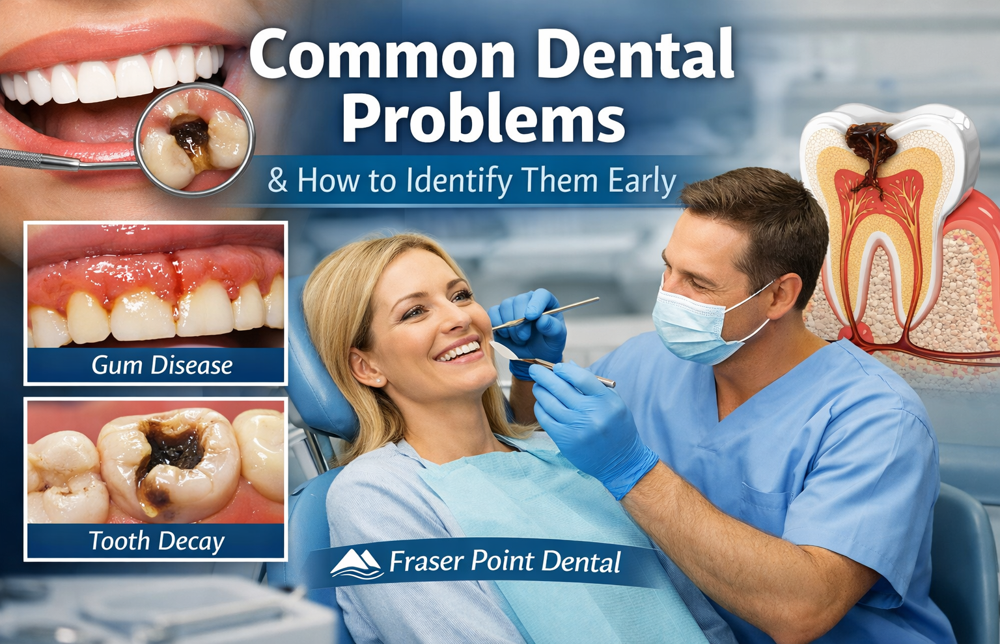
Taking care of your teeth isn’t just about flaunting a bright smile—it’s crucial for your overall health and confidence too. The tricky part? Many dental issues don’t make themselves known right away. They often creep in quietly, without any pain or obvious signs. By the time you start feeling discomfort, the problem might have already escalated.
The good news is that most common dental problems are easy to treat when caught early. Knowing what to look for can help you act sooner, avoid complicated treatments, and keep your smile healthy for years to come.
Below are some of the most common dental issues patients experience—and the early signs that shouldn’t be ignored.
Tooth Decay (Cavities)
What is tooth decay?
Tooth decay occurs when plaque bacteria produce acids that gradually erode your tooth enamel. Over time, this damage can lead to cavities.
Early signs to keep an eye on:
- White or chalky spots on your teeth
- Sensitivity to hot, cold, or sweet foods
- Mild toothaches or occasional discomfort
- Persistent bad breath
Why early detection matters:
If caught early, cavities can typically be treated with simple fillings. But if you let it slide, decay can dig deeper into the tooth, resulting in severe pain, infection, or even tooth loss.
Prevention tips:
Brushing twice a day, flossing daily, cutting back on sugary snacks, and keeping up with regular dental checkups can make a world of difference.
Gum Disease (Gingivitis & Periodontitis)
What is gum disease?
Gum disease is an infection affecting the gums and the tissues that support your teeth. It often starts as gingivitis and can progress to periodontitis if it’s not addressed.
Early signs to keep an eye on:
- Early warning signs:
- Red, swollen, or tender gums
- Bleeding when you brush or floss
- Ongoing bad breath
- Gums receding from the teeth
Why early detection matters:
Gingivitis is completely reversible with professional cleanings and good oral care. Advanced gum disease, however, can lead to bone loss and loose or missing teeth.
Prevention tips:
Regular brushing and flossing, along with routine dental visits, can go a long way in keeping your gums healthy.
Tooth Sensitivity
What causes tooth sensitivity?
Sensitivity occurs when enamel wears down or gums recede, exposing the sensitive inner layers of the tooth.
Early signs to keep an eye on:
- Sharp pain when eating or drinking something hot or cold
- Discomfort with sweet or acidic foods
- Sensitivity while brushing
Why early detection matters:
Sensitivity can be a sign of enamel erosion, cavities, or gum recession. Treating the cause early helps prevent long-term damage.
Prevention tips:
Using desensitizing toothpaste and avoiding acidic foods may help. If sensitivity continues, a dental exam is important.
A comprehensive general dentistry exam can pinpoint the cause and recommend the right treatment.
Tooth Grinding (Bruxism)
What is bruxism?
Bruxism is when you unconsciously clench or grind your teeth, often while you’re asleep.
Early signs to keep an eye on:
- Jaw pain or tightness
- Morning headaches
- Flattened or worn-down teeth
- Increased sensitivity in your teeth
Why early detection matters:
If you ignore it, grinding can lead to serious damage to your teeth, strain your jaw, and even cause cracks.
Prevention tips:
A custom-made night guard can protect your teeth and help reduce jaw tension while you sleep.
Cracked or Chipped Teeth
What causes cracked teeth?
Teeth can crack or chip from biting hard foods, dental injuries, or ongoing tooth grinding.
Early signs to keep an eye on:
- Pain when chewing
- Sensitivity to hot or cold
- Rough or sharp edges
- Occasional, unexplained discomfort
Why early detection matters:
Small cracks can worsen over time and may eventually lead to infection or tooth loss.
Prevention tips:
Even minor damage should be checked out by a dentist as soon as you can to avoid further issues.
Persistent Bad Breath (Halitosis)
What is halitosis?
Ongoing bad breath isn’t always caused by food or poor brushing—it can be a sign of deeper dental issues.
Early signs to keep an eye on:
- Bad breath that doesn’t go away after brushing
- Dry mouth
- Gum irritation or infection
- A constant unpleasant taste
Why early detection matters:
Chronic bad breath is often linked to gum disease, cavities, or oral infections that require professional care.
Prevention tips:
Food particles and plaque trapped between teeth are a major cause of bad breath. Brushing twice a day and flossing once daily helps keep bacteria under control.
Oral Infections & Dental Abscesses
What is a dental abscess?
A dental abscess is a painful infection caused by bacteria entering the tooth or surrounding gums.
Early signs to keep an eye on:
- Throbbing or intense tooth pain
- Swelling in the gums, jaw, or face
- Fever
- Pain when chewing
Why early detection matters:
Dental infections can spread quickly and may lead to serious health problems if not treated promptly.
Prevention tips:
Any swelling, fever, or severe pain should be evaluated immediately by a dental professional.
Early Signs of Oral Cancer
What is oral cancer?
Oral cancer can develop in the lips, tongue, cheeks, or throat and is often painless in its early stages..
Early signs to keep an eye on:
- Sores that don’t heal
- Red or white patches in the mouth
- Difficulty swallowing
- Lumps or thickened areas
Why early detection matters:
Early diagnosis significantly improves treatment outcomes. Routine dental exams often include oral cancer screenings.
Prevention tips:
Avoid tobacco in all forms: Smoking, vaping, and chewing tobacco are among the leading risk factors for oral cancer. Quitting or avoiding tobacco significantly lowers your risk.
Why Regular Dental Checkups Matter
Many dental problems don’t cause noticeable symptoms until they’re advanced. Regular dental checkups allow your dentist to catch early signs of decay, gum disease, infections, and other concerns—before they affect your comfort or health.
Professional cleanings also remove plaque and tartar that brushing alone can’t reach, helping prevent future dental issues.
Protect Your Smile with Early Dental Care
Staying aware of early warning signs and scheduling routine dental visits are the best ways to maintain long-term oral health. Early treatment helps preserve your natural teeth, saves time and money, and prevents unnecessary discomfort.
If you’ve noticed changes in your teeth or gums—or if it’s been a while since your last visit—the caring team at Fraser Point Dental is here to support you. Proactive care today leads to a healthier, more confident smile tomorrow.
Book an appointment today to receive expert guidance on pediatric dental care and tips for maintaining healthy smiles in today’s digital age.

Dr. Kalirai, DMD, was born in Prince George, British Columbia before moving to Vancouver in 1994 to attend the University of British Columbia. He was accepted into the UBC School of dentistry immediately following his BSC.
Dr. Kalirai enjoys playing tennis, working out, Tae-Kwon-Do, and spending quality time with his wife Lisa, and 2 daughters. He continues to be involved in Tae-Kwon-Do after receiving his black belt at age 16 and winning 2 gold medals in a row at the provincial and national levels.
Request an Appointment